
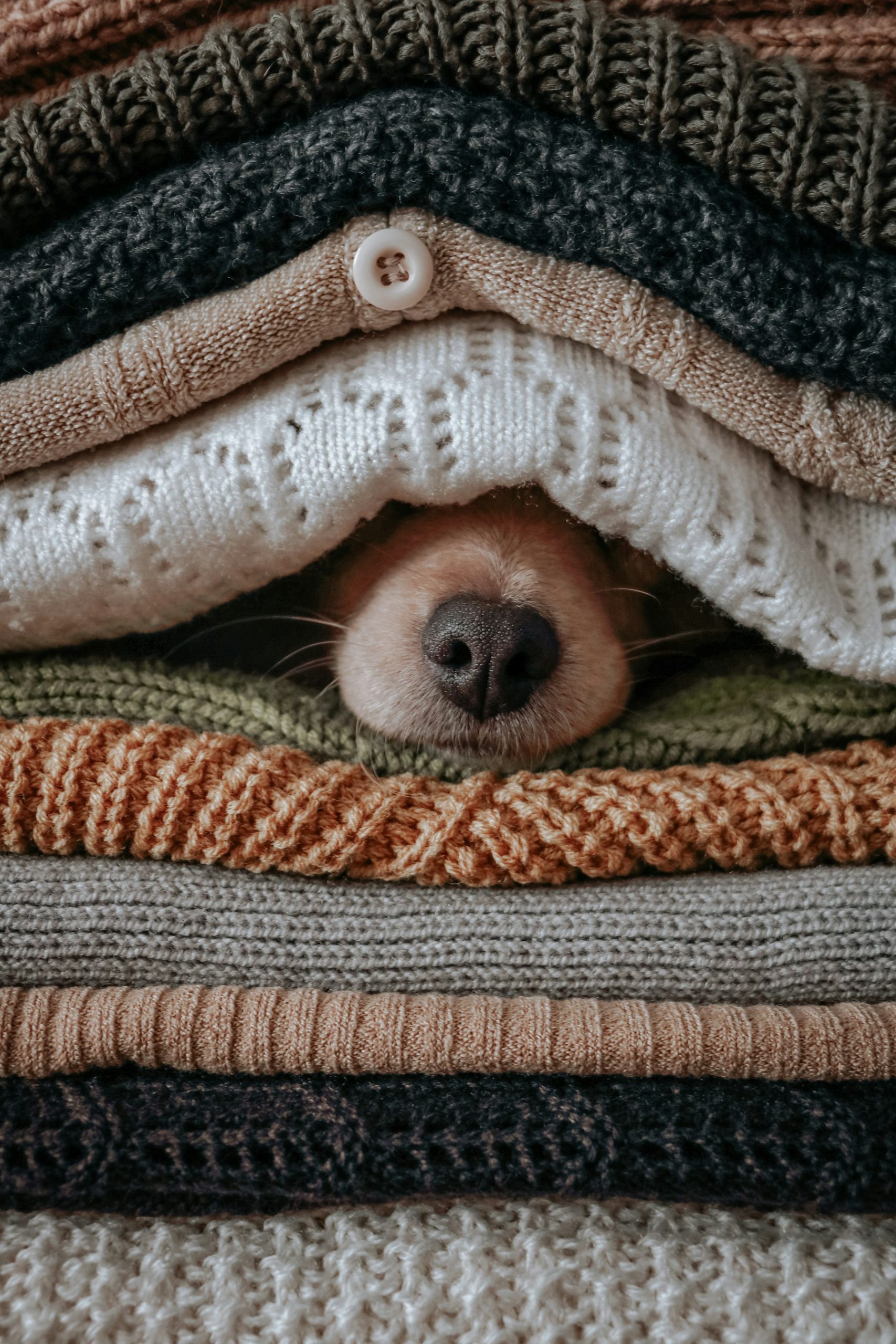
You step out of the shower and your sock is gone. You leave the bedroom for thirty seconds and your dog is trotting down the hallway with your underwear like they just won a prize. You come home from the gym and your workout shirt has been relocated from the hamper to the dog bed, where your dog is curled up on it like it is the most valuable blanket in the house.
If your dog is a clothing thief, you are not alone and you are not doing anything wrong. This is one of the most common behaviors dog owners deal with, and it has a lot more going on than simple mischief. Your dog is not being bad. They are being a dog, and the reasons are more interesting than you might expect.
It Starts With Your Smell
The primary reason your dog targets your clothes, especially the dirty ones, is that those clothes are drenched in your scent. And to your dog, your scent is one of the most important things in their world.
Dogs experience scent very differently than we do. Sources often describe their sense of smell as many times more sensitive than ours, which helps explain why a laundry hamper can be so interesting to them. Your sweat, skin oils, and body chemistry all cling to worn fabric, and that scent profile matters to a dog whose nose does most of the heavy lifting.
Dogs often go after clothing items that carry the strongest concentration of your scent. Socks, underwear, and workout clothes are especially appealing because they tend to hold onto sweat and body oils. Your dog is not being gross. They are going straight to the items that smell the most like you.
Dogs also have a vomeronasal organ, or Jacobson’s organ, which helps them process certain chemical signals. Whether clothing theft specifically engages that system is not well-studied, but it helps explain why scent-rich objects can feel so compelling.
Your Clothes Are a Comfort Object
For many dogs, stealing your clothes is not about play or mischief. It is about comfort. Your scent on a worn piece of clothing can be reassuring, especially when you are not around.
This is the same principle behind why many dogs are drawn to laundry and why some settle on clothing left on the floor or bed. If your dog tends to sleep on your clothes too, our article on why dogs sleep on clothes covers that side of the behavior in more detail.
This behavior may be more noticeable in dogs with separation-related distress or dogs who are generally more anxious. If your dog consistently takes your clothes to their sleeping spot or carries a specific item around the house when you are gone, they may be using your scent to self-soothe.
They Want Your Attention, and It Works Every Time
If your dog grabs your sock and runs through the living room while you leap off the couch and chase them, congratulations. You have just played exactly the game they wanted. And they will do it again tomorrow.
Many dogs learn very quickly that stealing clothing gets an immediate reaction from their person. You stand up, move toward them, talk to them, and often engage right away. From your dog’s perspective, that response can be rewarding even if you are annoyed.
Why This Actually Matters: The Safety Concern
Cornell’s veterinary guidance lists socks and pieces of clothing among common swallowed items, and the MSD Veterinary Manual notes that intestinal obstruction can become a surgical emergency.
How to Manage It
The single most effective thing you can do is also the most boring: keep your clothes off the floor. Use a hamper with a lid. Close your closet door. Pick up your socks before your dog does. Management prevents the behavior from happening in the first place, which is always easier than trying to correct it after the fact.
When your dog does get ahold of something, do not chase them. Chasing is the game. It reinforces the behavior and teaches your dog that stealing clothes is the fastest way to get you fully engaged. Instead, stay calm and use a trained “drop it” cue with a high-value trade. If you have not taught “drop it” yet, offer a treat or a favorite toy to encourage your dog to release the item voluntarily. Make the trade so appealing that giving up the clothing is the obvious better deal.
Address the underlying motivation. If your dog is stealing clothes because they are bored or understimulated, increase their exercise and mental stimulation. If they are doing it for comfort, consider leaving a worn shirt in their crate or bed intentionally. Giving them sanctioned access to your scent removes some of the need to steal it. If it is attention-seeking, make sure you are providing enough engagement during the day so your dog does not have to manufacture it.
For dogs who consistently steal and chew or swallow fabric, consult your vet to rule out pica, which is the persistent ingestion of non-food items. Pica can have medical or behavioral causes and should be professionally evaluated.
The Bottom Line
Your dog steals your clothes because those clothes are the most concentrated source of your scent in the house, and your scent is one of the most important things in your dog’s life. They are not being defiant, vengeful, or badly behaved. They are doing what their nose and their bond with you are telling them to do.
For most dogs, this behavior is a manageable mix of scent attraction, comfort seeking, boredom, and the discovery that stealing things gets a reaction from you. Keep your laundry off the floor, teach a solid “drop it,” make sure your dog is getting enough stimulation, and watch for any signs that carrying has turned into chewing or swallowing.
Related reading: Clothing behavior usually sits near a bigger cluster of scent, comfort, and attachment behaviors. Read why dogs sleep on your clothes and why dogs follow you everywhere.

Samantha Tilton
I catch the things that are easy to miss. The small changes, the quiet signs, the details hiding in plain sight. I co-founded The Daily Dog because the best thing you can do for your dog is pay attention, and I write to help you know what to pay attention to.
