
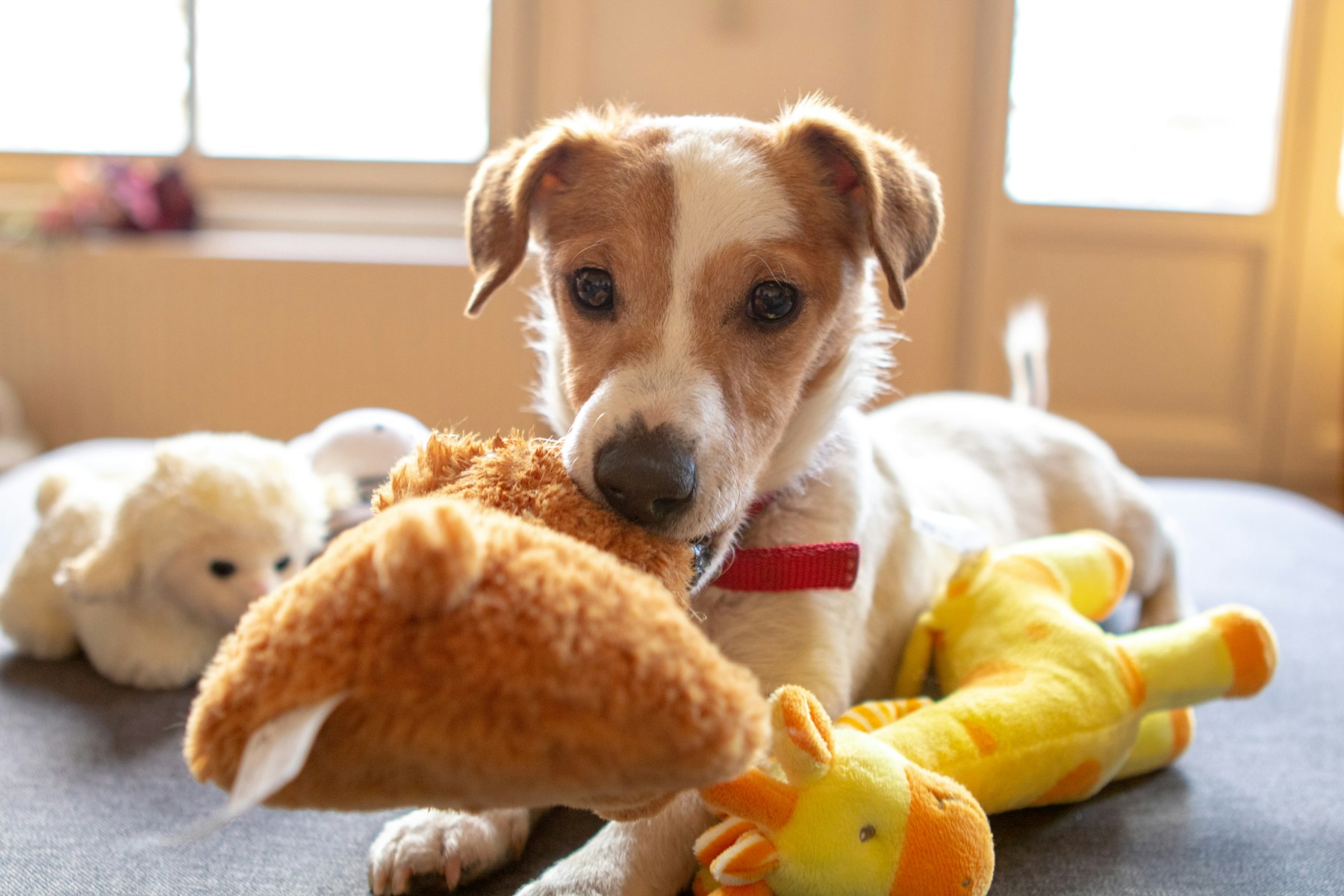
Your puppy is adorable, cuddly, and apparently trying to eat your hands. Your fingers are covered in tiny scratches. Your sleeves have holes. Your ankles are under constant siege. You love this dog, but you are also starting to wonder if you brought home a land piranha.
Take a breath. The biting is normal, it is temporary, and it will get better. Knowing when it ends, why it is happening, and what to do about it makes the difference between a phase you survive and a habit that follows your dog into adulthood.
Why Puppies Bite Everything
Puppies are not biting you because they are aggressive, badly behaved, or trying to establish dominance. They are biting because their mouth is their main tool for exploring the world. Everything goes in the mouth: your fingers, your shoes, the furniture, and anything else within reach.
There are usually a few reasons happening at once.
Exploration comes first. Puppies use their teeth to investigate textures, shapes, and how things respond when grabbed.
Play biting is the second driver. In a litter, puppies learn social skills and boundaries through mouthing, nipping, and biting. When one puppy bites too hard, the other yelps and play stops. Over time, that teaches bite inhibition, which is the ability to control bite pressure. When your puppy nips you during play, they are doing the same thing they did with their littermates. They just have not yet learned that human skin is far more sensitive than puppy fur.
Teething is the third factor, and it is usually the one that makes the biting feel relentless. Chewing and mouthing help relieve gum discomfort, and your hands, feet, and clothing are the easiest targets in the house.
The Teething Timeline
Understanding when teeth come in and fall out helps explain why the biting intensity changes over time.
Puppies are born without teeth. Their baby teeth start coming in around three weeks of age, and by about six to eight weeks most puppies have a full set of 28. Around 12 to 16 weeks, those baby teeth start falling out as the adult teeth push through. This is usually when teething discomfort is at its worst and the urge to chew spikes.
By about six months, most puppies have their full set of 42 adult teeth and the worst of the teething discomfort has passed. Some breeds, especially smaller ones, may take a little longer. If your puppy still has baby teeth at six months, mention it to your vet.
When Biting Peaks
The peak of puppy biting usually falls around 12 to 16 weeks of age. This lines up with the shift from baby teeth to adult teeth, when teething discomfort is highest and the urge to chew is strongest.
During this window, your puppy has sore gums, a strong drive to chew, and more energy than they did a few weeks earlier. It is intense, but it does not last. For most puppies, the biting starts easing around 20 weeks as adult teeth settle in and teething pain fades.
When It Actually Stops
Most puppies show a clear reduction in biting by around six months of age, once their adult teeth are in and teething discomfort is no longer a factor. The broader mouthing phase can continue until around eight to ten months, especially in high-energy dogs.
Teething-related biting fades as the mouth stops hurting. The rest improves with training and time.
What Bite Inhibition Is and Why It Matters
Bite inhibition is your puppy’s ability to control the pressure of their bite. Puppies start learning it with their littermates. When one puppy bites too hard, the other yelps and play stops. Over time, that teaches the biting puppy to use a softer mouth.
When your puppy comes home with you, that lesson needs to continue. The goal is not to stop your puppy from ever using their mouth. It is to teach them that human skin is much more sensitive than puppy fur, and that biting too hard immediately ends the interaction.
That matters beyond puppyhood. Even a good adult dog may bite if startled, hurt, or frightened. A dog with bite inhibition is more likely to deliver a controlled nip than a full-force bite.
How to Get Through It
The approach that works is simple in concept and requires patience in execution. You are teaching your puppy one lesson: teeth on human skin means the fun stops.
When your puppy bites during play, respond immediately. Let out a brief, high-pitched sound to mark the moment, similar to the yelp a littermate would make, then withdraw your hands and stop engaging. Turn away, stand up, or step behind a baby gate for 15 to 30 seconds. Then return and resume play. If the puppy bites hard again, repeat the sequence. Consistency is what teaches the lesson.
As your puppy gets better at moderating their pressure, gradually raise the bar. In the first few weeks, you might only withdraw for the hardest bites. Over time, you start withdrawing for medium bites, then light ones, until your puppy understands that any tooth contact on skin ends the game.
Redirection is your other main tool. Keep appropriate chew toys within reach at all times. When your puppy starts mouthing your hand, calmly swap your hand for a toy. When they bite at your ankles, redirect to a tug toy. The message is not “do not use your mouth.” It is “use your mouth on this, not on me.”
Make sure your puppy has access to a variety of chew options, especially during the teething months. Rubber toys, frozen Kongs, rope toys, and age-appropriate chews all give your puppy somewhere to direct the chewing urge that is not your body or your furniture.
Exercise and sleep are two of the most underrated tools for managing puppy biting. A tired puppy bites less. And a puppy getting enough sleep is dramatically less mouthy than an overtired one. If your puppy’s biting spikes every evening, they probably need a nap, not more training.
What Not to Do
Do not hit, slap, or physically correct your puppy for biting. Physical punishment does not teach bite inhibition. It teaches your puppy to fear your hands and can damage trust.
Do not hold your puppy’s mouth closed. That outdated advice often makes puppies more worried about hands near their face, which can make grooming and vet handling harder.
Do not yell. For some puppies it is scary. For others it makes the game feel bigger.
Do not chase your puppy when they nip and run. That gives them exactly the game they wanted.
For the vast majority of puppies, though, the biting phase is exactly that: a phase. It peaks during teething, improves as the adult teeth come in, and fades with consistent training and time. It is exhausting while you are in it, but it does pass.
The SmartPetLove Snuggle Puppy also helped during the worst of the teething phase, since the warmth and simulated heartbeat give an overstimulated puppy something to settle against that does not involve someone’s hand or arm.
The Daily Dog earns commissions from qualifying purchases through affiliate links. We only recommend products we have personally used with Hazel or Kaia and clearly note what has helped them.

Samantha Tilton
I catch the things that are easy to miss. The small changes, the quiet signs, the details hiding in plain sight. I co-founded The Daily Dog because the best thing you can do for your dog is pay attention, and I write to help you know what to pay attention to.
