
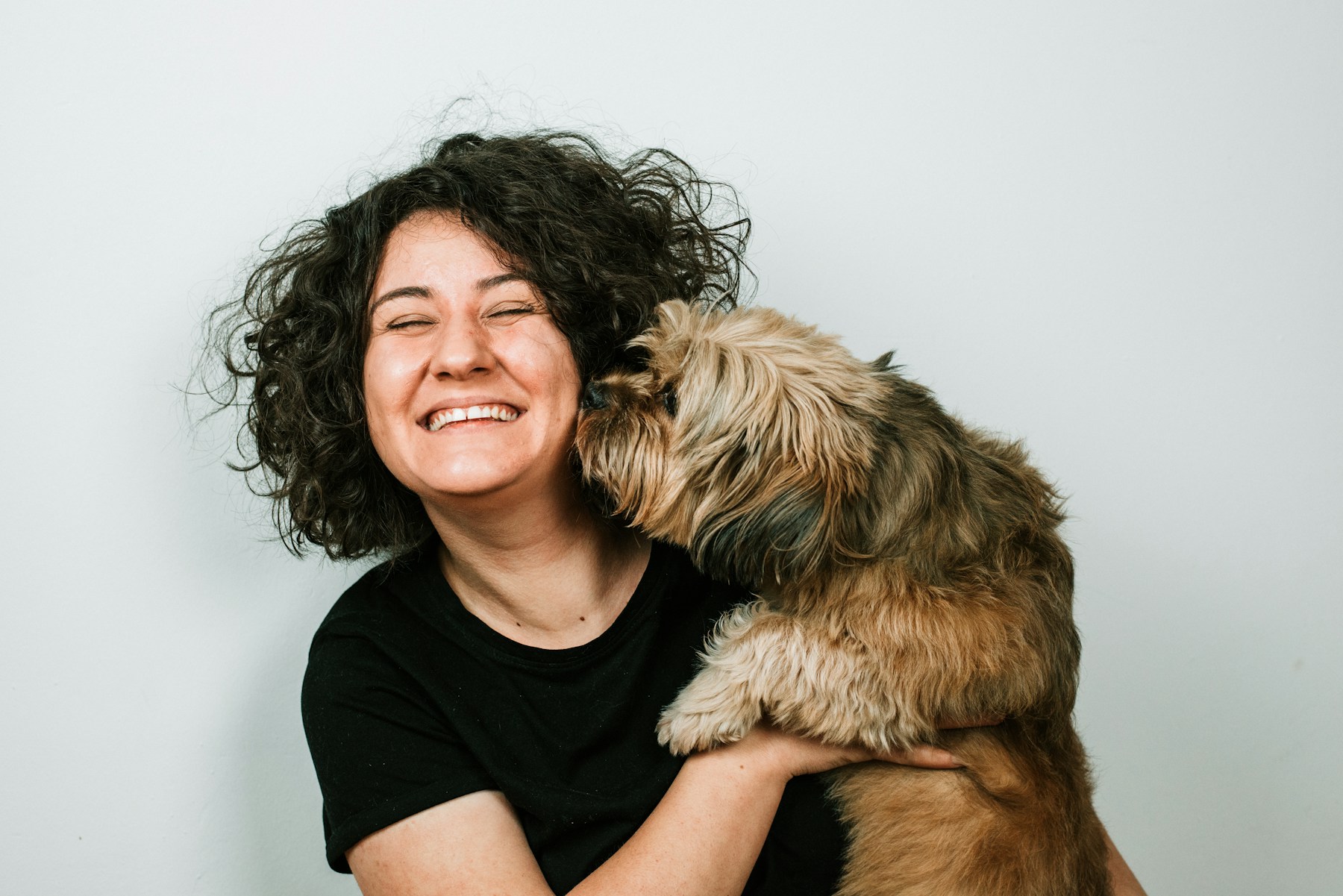
Your dog leans into you when you sit down. They press their body against your leg when you stand in the kitchen. They nudge your hand with their nose until you start petting them. They curl up against you at night and stay there until morning.
This is not random. Your dog seeks physical contact because touch plays a big role in comfort, safety, and connection. Sometimes that need for connection looks like sitting as close to you as possible all day long.
It Starts at Birth
The first thing a puppy experiences in the world is touch. Before their eyes open, they feel warmth, littermates, and their mother’s care.
That early contact helps shape how puppies experience safety and regulation. When your dog grows up and presses against you on the couch, they may be drawing on some of that same early wiring.
What Touch Does to Your Dog’s Brain
When you pet your dog, something measurable happens inside both of you. Research on the dog-owner bond suggests that gentle interaction, touch, and mutual gaze are tied to oxytocin, a hormone involved in bonding and social connection. A 2015 Science paper found evidence for an oxytocin-linked feedback loop between dogs and owners.
That helps explain why touch can feel so reinforcing. Your dog leans in, you respond, and the interaction strengthens the bond.
The style of touch matters too. Many dogs relax more with slow, calm stroking than with fast patting or rough scratching.
Dogs Are Not Built to Be Untouched
Over thousands of years of domestication, dogs became unusually tuned in to human social cues. They read our expressions, follow our gaze, and seek our proximity.
Touch is also a very common everyday way dogs interact with their owners.
This does not mean every dog wants to be touched the same way or the same amount. Individual dogs have different preferences. Some love full-body contact and will crawl into your lap given the chance. Others prefer a hand resting on their back or a scratch under the chin and nothing more. Respecting your dog’s preferences is part of building the trust that makes touch meaningful in the first place.
Touch as a Stress Regulator
One practical reason dogs seek physical contact is stress management. They cannot talk through anxiety, but they can press against someone they trust.
You may notice this during storms, vet visits, or other unfamiliar moments. Touch can be part of how dogs settle when the world feels less predictable.
Research supports that idea. For example, a 2020 Animals study on stroking and salivary oxytocin/cortisol in guide dogs suggested that gentle touching may be beneficial for dogs during and after stressful events, even if it does not remove the stressor itself.
If your dog seeks more physical contact during stressful situations, that is often a sign they are looking to you for support. In some dogs, that shows up as planting themselves right on your feet when they want the closest possible contact.
The Dogs Who Do Not Want to Be Touched
Not every dog craves physical contact, and that is worth acknowledging. Dogs who were undersocialized as puppies, dogs with a history of trauma, or dogs who simply have a more independent temperament may not seek out touch the way other dogs do. That does not mean something is wrong with them. It means their comfort zone is different.
If your dog pulls away when you reach for them, stiffens when you pet them, or moves to another spot when you sit too close, listen to that. Forcing physical contact on a dog who does not want it does not build trust. It erodes it. The goal is not to make your dog tolerate touch. It is to create an environment where they choose it because they feel safe enough to.
For dogs who are warming up to physical contact, let them initiate. Sit on the floor near them without reaching for them. Let them come to you. When they do, keep the touch brief and gentle. Over time, as trust builds, most dogs will seek more contact on their own terms.
When Touch Changes Suddenly
If your dog has always been affectionate and suddenly stops wanting to be touched, pay attention. A dog who flinches, pulls away, or becomes reactive when handled may be uncomfortable or in pain.
On the other side, a dog who suddenly becomes much more touch-seeking than usual may be anxious, unwell, or going through age-related changes. Cornell notes that behavior changes in senior dogs can be part of cognitive dysfunction syndrome.
Either direction of change is worth a conversation with your vet.
How to Give Your Dog What They Need
You do not need a strict routine for this. You just need to be present and responsive. When your dog nudges your hand, pet them. When they lean against you, let them stay. When they curl up next to you, rest your hand on them.
A few things that tend to work well for most dogs: slow strokes along the chest and shoulders, gentle scratching behind the ears or under the chin, and calm, steady pressure rather than quick pats. Watch your dog’s body language. A dog who is enjoying the contact will lean in, soften their eyes, and relax their body. A dog who is not will turn away, lip-lick, yawn, or move.
The best physical contact is the kind your dog asks for and you give freely.
The Bottom Line
Your dog needs physical contact with you. Not because they are clingy or codependent, but because touch is one of the deepest forms of communication they have. It regulates their stress, strengthens their bond with you, and tells them something that no amount of food, toys, or walks can say on its own: you are loved, you are safe, and you are not alone.
The next time your dog presses against you for no apparent reason, there is a reason. They need you. And for a few seconds, all you have to do is be there.
This article is for general educational purposes and is not veterinary medical advice. If your dog’s behavior around physical contact changes suddenly, consult your veterinarian to rule out pain or underlying health issues.
Related reading: Physical closeness can show up in a few different ways, and the pattern matters more than one isolated behavior. Read why dogs stare at you, why dogs sit so close, and why dogs sleep on your clothes.

Samantha Tilton
I catch the things that are easy to miss. The small changes, the quiet signs, the details hiding in plain sight. I co-founded The Daily Dog because the best thing you can do for your dog is pay attention, and I write to help you know what to pay attention to.
