
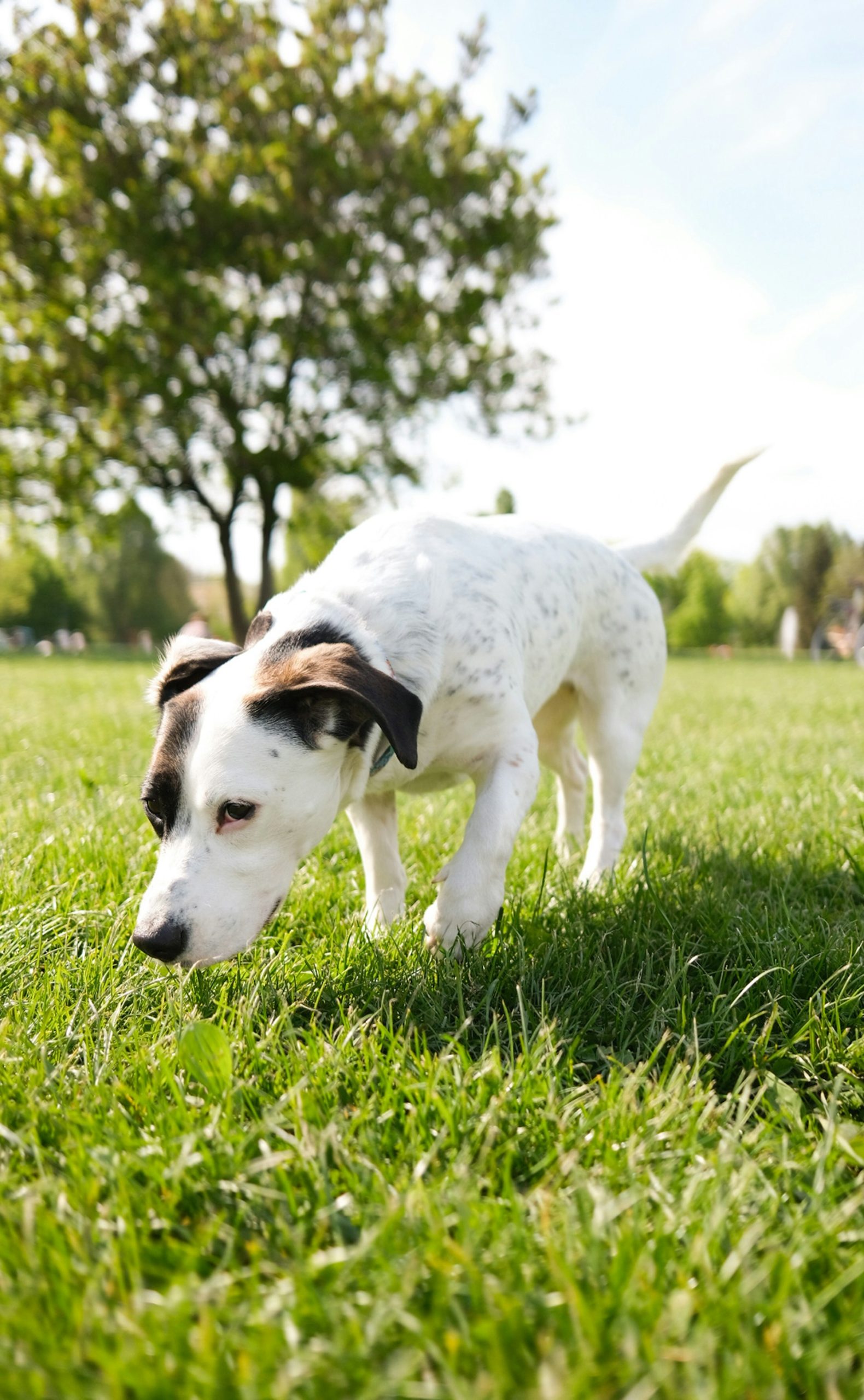
Our Aussie doodle Hazel does this randomly in the backyard. She will be zooming around, full of energy, and then just stop and start chomping on grass like she forgot she was a dog for a second. Sometimes she does it when she is bored too. Just standing there, grazing. Like a tiny cow with better hair.
If your dog does this, you have probably wondered if something is wrong. Short answer: almost always no.
Dogs eat grass for several reasons: boredom, a need for more fiber, an upset stomach, or simply because they enjoy the taste. About 80% of dogs do it at some point, and in most cases it is completely harmless. The only real concern is if the grass has been treated with pesticides or your dog is frantically gulping it and repeatedly vomiting.
Almost All Dogs Do It
If your dog eats grass, they are in the majority. Studies show that roughly 80% of dogs eat grass or plants at some point. It is one of the most common behaviors reported by dog owners, and it has been observed in wild dogs and wolves too.
This is not new. Dogs have been eating grass for as long as dogs have existed. It is part of being a dog.
The Most Common Reasons
They Just Like It
Sometimes the simplest explanation is the right one. Some dogs enjoy the taste or texture of grass, especially young, tender blades in the spring. They are not sick. They are not nutritionally deficient. They just think grass tastes good.
If your dog casually nibbles on grass during walks and seems perfectly happy, this is probably the reason.
They Want More Fiber
Grass is a source of fiber, and some dogs instinctively seek it out when their diet is lacking. If your dog eats grass frequently, it might be worth looking at their current food. Are they getting enough fiber? A high-quality diet with adequate fiber content can sometimes reduce grass eating.
This does not mean your dog’s food is bad. It just means their body might be telling them they need a little extra roughage.
They Have an Upset Stomach
This is the one most people jump to, and it is sometimes true. Some dogs eat grass when they feel nauseous, and the grass can trigger vomiting, which makes them feel better.
But here is the thing: research shows that only about 25% of dogs vomit after eating grass. Most dogs eat grass without any stomach issues at all. So while an upset stomach can be the cause, it is not the most common reason.
If your dog eats grass and then throws up once, that is usually not a concern. If they are eating grass urgently, gulping it down frantically, and vomiting repeatedly, that is different and worth calling your vet about.
Boredom
This is Hazel’s reason half the time. She will be in the yard with nothing going on, and the grass becomes entertainment. Dogs that are understimulated sometimes turn to unusual behaviors, and grass eating is one of the harmless ones.
More walks, puzzle feeders, training sessions, and interactive play can help. Or just go outside and throw a ball. Problem solved.
Instinct
Dogs are scavengers by nature. Their ancestors ate a varied diet that included plant matter, berries, and yes, grass. The instinct to forage and explore food sources is still wired into your dog’s brain, even if their bowl is full of premium kibble.
Eating a little grass is your dog being a dog.
When to Actually Worry
Casual grass nibbling is fine. Here is when it becomes a concern:
Treated lawns. This is the biggest real risk. If the grass has been treated with pesticides, herbicides, or fertilizers, it can be toxic to your dog. Be cautious about where your dog grazes, especially in public parks, golf courses, and neighbors’ yards.
Frantic, desperate eating. If your dog is frantically gulping down large amounts of grass, pacing, drooling, or seems distressed, something might be wrong with their stomach or intestines. This warrants a vet call.
Frequent vomiting. Occasional vomiting after grass eating is normal. Frequent vomiting is not. If your dog is throwing up regularly, grass or no grass, get them checked.
Eating things they should not: If your dog eats grass, poop, rocks, sticks, dirt, and socks, this could be pica, a condition where dogs compulsively eat non-food objects. This needs veterinary attention.
Parasites. Grass and soil can contain parasite eggs. Keep your dog on a regular deworming schedule, especially if they are a frequent grass eater.
What You Can Do
Let them eat it (if the grass is clean and untreated). For most dogs, a little grass is harmless.
Improve their diet. If the grass eating is frequent, consider switching to a food with more fiber or adding a small amount of steamed vegetables (green beans, broccoli, or spinach) to their meals.
Increase stimulation. More walks, more play, more training. A busy dog has less time to graze.
Grow a safe patch. Some owners grow a small patch of wheatgrass or oat grass specifically for their dog. It is safe, clean, and gives your dog a healthy outlet for the behavior.
Rule out medical causes. If the grass eating is new, sudden, or accompanied by other symptoms (vomiting, diarrhea, weight loss, lethargy), a vet visit is a good idea. Blood work and a fecal test can rule out most issues quickly.
The Bottom Line
Your dog eating grass is almost certainly not a sign of a serious problem. Most dogs do it, most dogs are fine, and most of the time it is either instinct, boredom, or they just think it tastes good.
Keep the grass clean, keep your dog stimulated, and keep their diet solid. Beyond that, let them be weird. Hazel is going to keep grazing in the backyard and we have made our peace with it.

Samantha Tilton
I catch the things that are easy to miss. The small changes, the quiet signs, the details hiding in plain sight. I co-founded The Daily Dog because the best thing you can do for your dog is pay attention, and I write to help you know what to pay attention to.
