
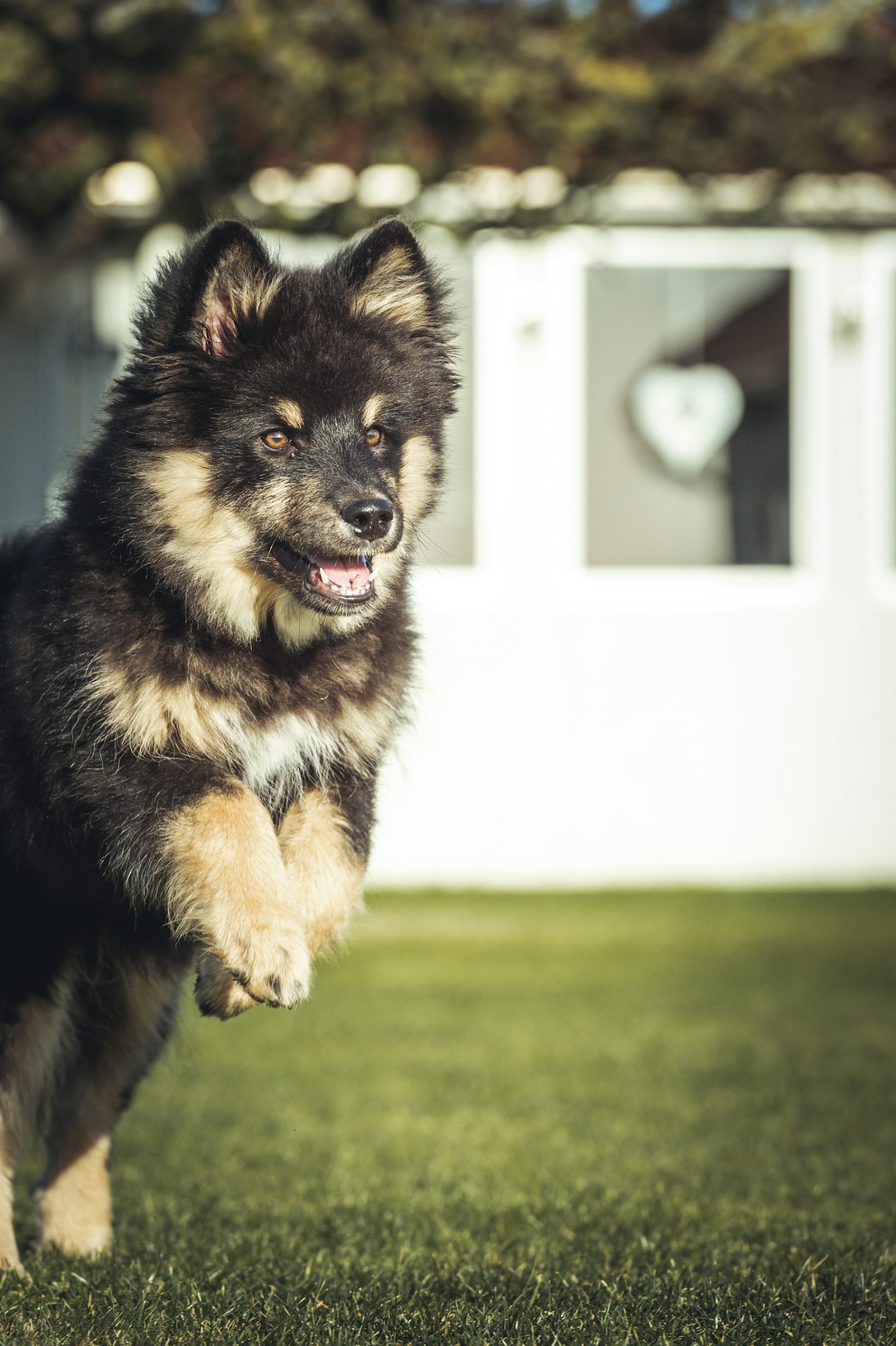
If you have ever been lying in bed, half-asleep, when your dog suddenly launches off the couch like a furry missile and starts tearing through the house at 2 AM, you are not alone. You are also not losing your mind.
What you are experiencing is a time-honored tradition known as the midnight zoomies.
It is hilarious when our dog Hazel gets midnight zoomies. She will fall asleep for a while and then suddenly she is ready to play, trying to activate hide-and-seek mode with us. It is both adorable and exhausting.
What Are Zoomies Anyway
Zoomies have a fancy scientific name. They are called FRAPs, which stands for Frenetic Random Activity Periods. That is a mouthful, but the behavior is simple to spot.
Your dog suddenly gets a burst of energy that seems to come from nowhere. They start running in circles, darting from room to room, spinning, maybe doing a few laps around the coffee table like it owes them money.
Most of the time, zoomies last a few minutes. Your dog might look a little wild-eyed, which can be alarming if you have never seen it before. But this is completely normal dog behavior.
Vets at Cornell describe it as a way for dogs to release pent-up energy, and the AVMA president-elect has put it even more simply: they are just having fun.
That is it. Your dog is not broken. They are having the time of their life.
Why Do They Happen at Night
Here is the thing about midnight zoomies. They are not magical. There are real reasons your dog saves their energy explosion for the exact moment you want to sleep.
Pent-up energy with nowhere to go
If your dog spent the day lying around while you were at work, they did not get the physical exercise they need. Dogs are built to move, and when they do not get enough activity during the day, that energy has to go somewhere.
So instead of a nice, civilized walk, your dog chooses 11 PM to remind you that they still have legs.
Post-dinner excitement
A lot of dogs get the zoomies after eating. The excitement of mealtime, the change in energy after food hits their system, it can all spark a burst of activity.
If dinner is at 6 PM and bedtime is at 10 PM, that gives plenty of time for the post-dinner zoomies to kick in right when you are trying to watch something on TV.
The post-nap launch sequence
Dogs sleep a lot, way more than humans do. And when they wake up from a good nap, they sometimes wake up fully charged.
Hazel is a perfect example. She will curl up on her bed and sleep for an hour or two, and then suddenly she is wide awake and running laps through the house. The midnight hour does not matter to her. If she slept, she is now rested, and she wants you to know it.
Dogs are naturally more active at twilight
This one surprises people. Dogs tend to have energy spikes during the transition between day and night. It is part of their natural rhythm, which means that evening zoomies are not a bug. They are a feature.
A Spotter Guide to the Zoomies
You will know the zoomies when you see them, but here are the classic signs in case you need confirmation that your dog is not possessed.
The tuck and run
Your dog drops low, tucks their butt, and takes off at maximum speed. This is the signature move. If your dog looks like a tiny, furry race car hugging the turns, congratulations, you have zoomies.
The play bow fake-out
Front legs down, butt up, tail going like a helicopter. This is the universal dog invitation to play, and it often happens right before they launch into a full sprint.
The wild eyes
Wide open, slightly unhinged, fully alive. Your dog is not scared. They are locked in. This is the face of pure, unfiltered joy.
The sudden stop
After a few minutes of chaos, your dog will flop down somewhere and look at you like nothing happened. They might be panting. They might fall asleep in 30 seconds. The zoomies are over. Until next time.
How to Survive the Chaos
You are probably not going to eliminate zoomies entirely. Dogs are dogs, and sometimes they just need to run. But you can reduce the midnight variety by addressing the root causes.
More daytime exercise
This is the obvious one. If your dog is zooming at night, try adding an extra walk or play session during the day. A tired dog is a calmer dog.
This does not mean you need to run a marathon together. Even 20 minutes of active play can make a real difference.
Mental stimulation counts too
Dogs get bored, and a bored dog has energy with nowhere to go. Puzzle toys, training sessions, or even practicing commands can tire your dog out in a different way.
A mentally tired dog is often calmer than a physically tired dog who still has their brain wired to go.
Build an evening wind-down
If your dog knows that certain things happen at certain times, they will be less likely to have random energy spikes.
A calm routine before bed, maybe a short walk or some quiet time together, can signal that it is time to settle. Not a guarantee, but it helps.
Do not chase them
I know it is tempting. You want to catch them and make them stop. But chasing a dog with the zoomies makes it worse. They think it is a game, and now you are part of the fun.
Instead, wait it out. Most zoomies burn themselves out in a minute or two. Grab a toy or call them in a calm voice if you want to redirect.
Protect the furniture
A zooming dog does not care about your coffee table, your ankles, or the glass of water you left on the floor.
If your dog has predictable zoom patterns, maybe move the breakables and throw down a rug on slippery floors so they can take the corners without wiping out.
The Reality
Midnight zoomies are one of those quirks that come with being a dog owner. It is not personal. Your dog is not trying to ruin your sleep on purpose. They are just being a dog.
So the next time Hazel decides that 1 AM is the perfect time to initiate a game of hide and seek, I try to remember that this is the same dog who sleeps on my feet every night and greets me like I have been gone for years even if I just walked to the kitchen.
The zoomies are part of the package. Embrace the chaos. Maybe keep a nightlight on so you do not trip over your dog when they come zooming past.
And remember, this phase will not last forever. Eventually, your dog will calm down, and you will miss these ridiculous late-night sprints through the house. Probably not tonight. But eventually.
If anything about your dog behavior suddenly seems unusual or intense, check in with your veterinarian.

Samantha Tilton
I catch the things that are easy to miss. The small changes, the quiet signs, the details hiding in plain sight. I co-founded The Daily Dog because the best thing you can do for your dog is pay attention, and I write to help you know what to pay attention to.
