
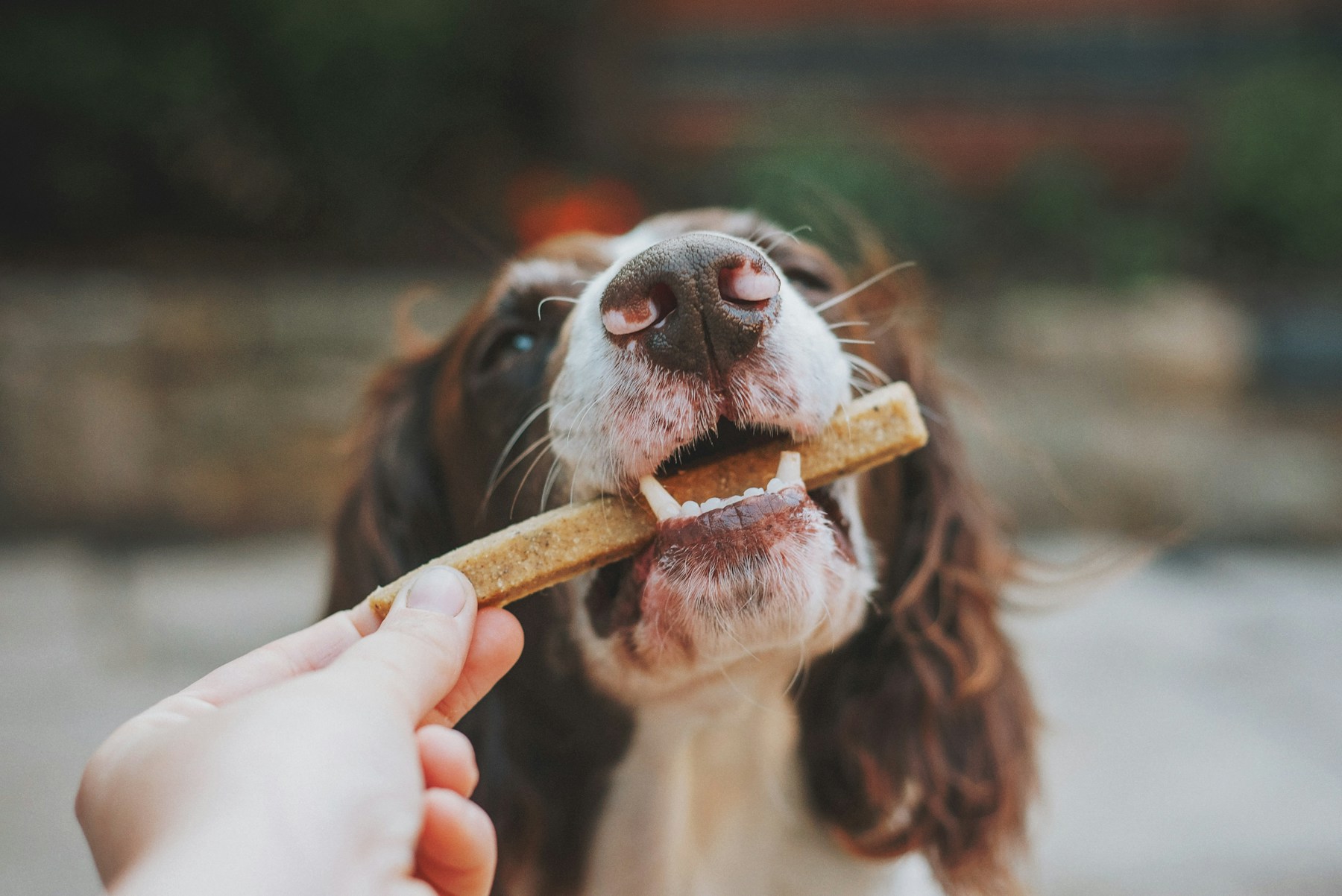
Most dog owners find out their dog has dental disease at a routine checkup they almost skipped. The vet mentions something about “stage 2 periodontal disease” and suddenly you are looking at an estimate for several hundred dollars in dental work. If you have been giving your dog dental chews every day, you might feel frustrated. You were doing something about it. So what went wrong?
The truth is, dental disease is incredibly common in dogs. Cornell’s Riney Canine Health Center notes that 80 to 90 percent of dogs over age 3 have some component of periodontal disease. But not all the things marketed to help actually work. Some are genuinely useful. Others are just expensive wishful thinking.
What Dental Disease Actually Is
Dental disease in dogs is not just about bad breath. It is an infection that starts below the gumline and works its way down to the tooth root.
Stage 1 is gingivitis. The gums look red and swollen, and there is early plaque buildup. This is the only stage that is fully reversible with good home care.
Stage 2 is early periodontal disease. The infection starts destroying the bone that holds the tooth in place. Once bone loss begins, you cannot undo it.
Stage 3 is moderate periodontal disease. More bone loss, deeper pockets around the teeth, and real damage to the supporting structures.
Stage 4 is severe periodontal disease. The tissue recedes, teeth become loose, and infection can spread to the bloodstream. This is where things get painful, dangerous, and expensive.
The scary part is that dogs are masters at hiding pain. Your dog might still eat normally even with stage 3 disease. You would not know anything was wrong until the vet tells you, which is one reason regular dental exams matter even when everything looks fine from the outside.
What Actually Works
There are three things that have solid evidence behind them.
Daily brushing with enzymatic toothpaste is the gold standard. Plaque builds up every day, so it needs to be removed every day. Enzymatic toothpaste helps break down plaque chemically while you brush mechanically. The key word is “daily.” Brushing once a week does almost nothing. Cornell’s veterinary dentistry team emphasizes that successful prevention requires daily home care combined with annual professional evaluation under anesthesia.
Dental chews that carry the VOHC seal are worth your money. The Veterinary Oral Health Council reviews submitted clinical data and awards its Seal of Acceptance to products shown to help control plaque or tartar. Look for the seal on the package. Not every dental chew has it, and the ones that do not have not been independently verified to do anything meaningful.
Water additives are a useful addition to your routine, not a replacement for brushing. Some carry the VOHC seal for tartar reduction, which means they have been independently verified. They can help cut down bacteria in your dog’s mouth, but they work best when combined with other methods. They are convenient for dogs who will not tolerate brushing, but do not expect a water bowl additive alone to stop periodontal disease.
What Is a Waste of Money
Most dental sprays on the market fall into this category. They might freshen breath temporarily, but they do not address the actual plaque and tartar that cause dental disease. If a product does not carry a VOHC seal, it has not been independently verified to help control plaque or tartar.
Dental chews without the VOHC seal are the same story. The packaging looks legitimate and the word “dental” is right there on the label. But without the seal, there is no independent evidence the chew does anything beyond maybe scraping a tiny bit of plaque off one surface of one tooth. Meanwhile, plaque is forming on every other tooth surface your dog is not chewing on.
Raw bones are controversial for good reason. The AKC notes that if a bone is harder than a tooth, the tooth can fracture, and that fracture means an expensive dental evaluation and treatment. They do not clean all tooth surfaces either. The FDA also cautions that raw pet food can carry harmful bacteria such as Salmonella, E. coli, and Listeria, which may pose health risks to both dogs and people in the household.
The Professional Cleaning Question
When your vet recommends a professional dental cleaning, they are talking about a procedure done under anesthesia. According to PetMD, a routine cleaning at a general practice vet typically runs $350 to $500, with advanced care reaching $1,500 or more if extractions or other work are involved.
This is not a routine spa day. The vet will perform dental X-rays to check the tooth roots below the gumline, clean thoroughly around every tooth including below the gum tissue, and polish the enamel to slow future plaque buildup. Anesthesia-free cleanings, which some groomers and mobile services offer, only address what is visible above the gumline. The American Veterinary Dental College is clear that anesthesia-free cleanings are not an adequate substitute for a complete dental cleaning and assessment. They simply cannot address what is happening below the gumline, which is where dental disease actually lives.
So when is a professional cleaning necessary? If your dog is at stage 2 or beyond, professional cleaning is the only way to stop the progression. Waiting only makes it worse and more expensive. The infection under the gumline will not go away with brushing alone.
This is exactly why prevention matters. The money you spend on a good toothbrush and VOHC-approved chews is nothing compared to a cleaning that turns into a multi-tooth extraction. If vet costs are already a concern, our guide on how to cut dog vet bills covers practical ways to keep routine care affordable.
Building a Routine That Sticks
If you are thinking about your own dog right now, here is what works.
Start slow. If your dog has never had their teeth brushed, do not expect them to accept it immediately. Let them taste the enzymatic toothpaste first. Lift their lip and touch their teeth with your finger. Build up to brushing over days or weeks. Forcing it too fast is the fastest way to make sure your dog never lets you near their mouth again.
Pick a time that works for your schedule and stick with it. Tying it to an existing habit, like right after a meal, makes it easier to stay consistent.
Use VOHC-approved dental chews a few times per week. These are not meant to replace brushing, but they help reach areas your brush cannot and give your dog something to look forward to.
For dogs with health conditions like Hazel’s kidney disease, dental health is even more important. Dental infection puts stress on the kidneys and adds a source of chronic inflammation the body has to deal with. Research from VCA Animal Hospitals notes that periodontal disease has been linked to changes in kidney and liver function, even in its earlier stages. We learned this from our vet, and it became a priority we take seriously.
Not every dog needs the same routine. Some dogs will not tolerate a toothbrush no matter how much you try. For those dogs, VOHC-approved dental chews and water additives are a practical alternative. What matters is doing something consistently that your dog will actually tolerate, rather than chasing perfection.
This article is for general educational purposes and is not veterinary medical advice. If your dog has signs of dental disease, consult your veterinarian for a proper diagnosis and care plan.
Related reading: Dental health is one piece of the larger longevity and prevention picture. Read dog longevity science and heavy metals in dog food.

Tyler Tilton
I do not write surface-level dog advice. When our dog got sick, I learned the hard way that most of what is out there is recycled, watered down, or just wrong. I started The Daily Dog to be the resource I could not find, the one that goes deeper, asks harder questions, and gives you the full picture so you can make real decisions for your dog.
