
You hired a trainer. You tried the calming chews. The behaviorist wants three more sessions. The collar, the puzzle toys, the routine. All of it is in place.
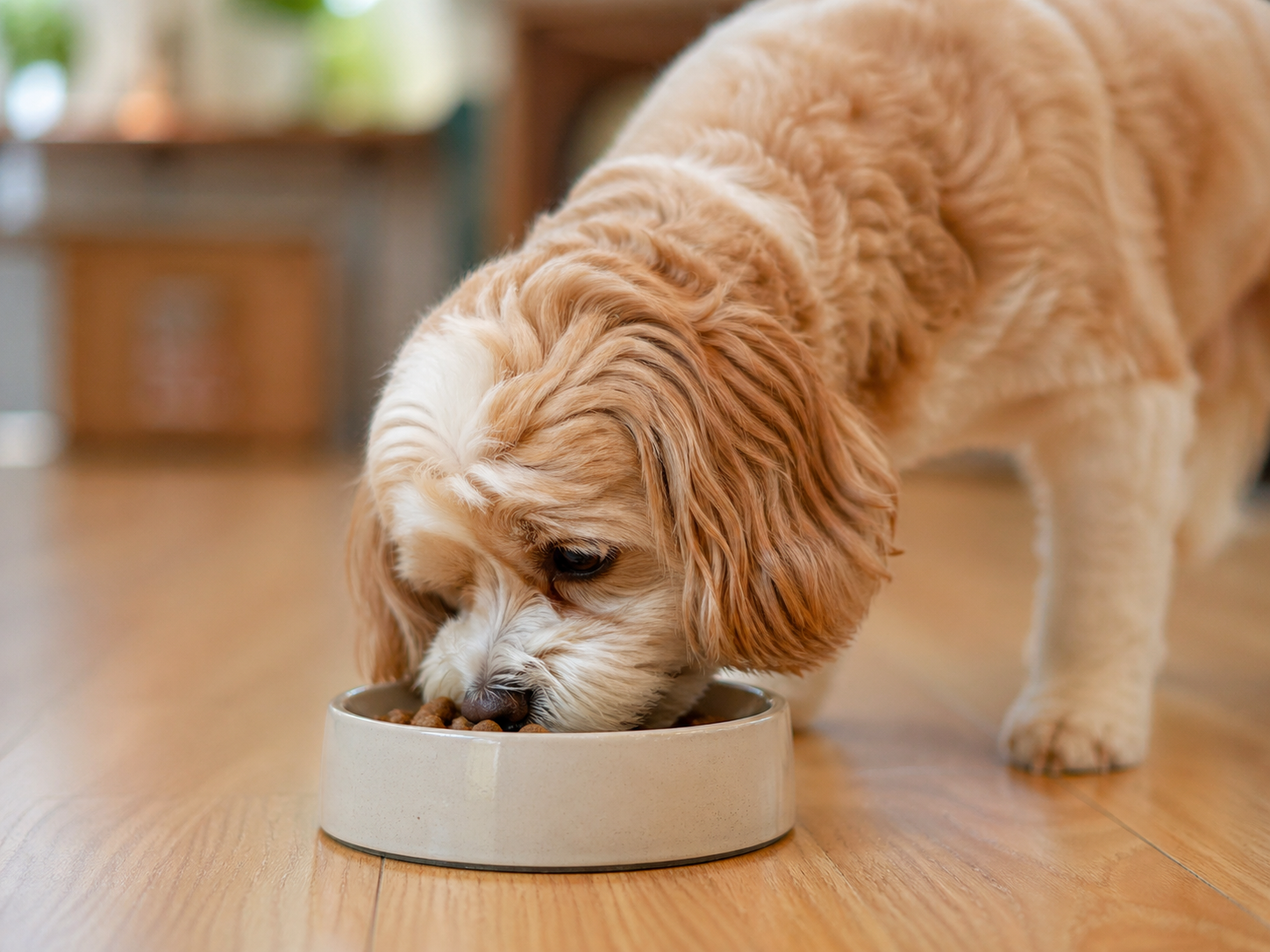
Nobody asked what is in the bowl.
That does not mean food explains every barking, lunging, pacing, or anxious behavior. It does not. Training, pain, genetics, sleep, exercise, stress, and early socialization still matter enormously.
But food is one of the daily inputs most owners never examine. If a dog is itchy, nauseous, uncomfortable, underfed, overfed, reacting poorly to an ingredient, or riding a rough post-meal energy curve, behavior may change. The bowl is not always the root cause. It is a variable worth checking.
The Gut-Brain Axis Is Real
Dogs have a communication network between the digestive tract, immune system, gut microbes, and central nervous system. This is called the gut-brain axis. A 2024 review in Veterinary Medicine International explains that gut microbes can affect mental health through metabolic, neural, endocrine, and immune pathways, while also noting that canine anxiety research is still early and needs larger studies.
That balance matters. A dog with chronic GI discomfort, dysbiosis, nausea, or food-related inflammation may be more restless or sensitive to handling. Sometimes the body is making normal life feel harder.
The practical takeaway is simple: when behavior changes and training is not moving the needle, look for body clues too. Loose stool, gas, itching, ear infections, paw licking, vomiting, appetite changes, or sudden sensitivity to touch all make diet more relevant. For more on the gut side, read our guide to dog gut health.
Tryptophan Is Not a Magic Calm Ingredient
Tryptophan gets a lot of attention because it is an essential amino acid and a precursor to serotonin, which helps regulate mood, anxiety, and impulse control. The theory is plausible: protein composition may affect how much tryptophan reaches the brain.
The dog research is mixed. A 2000 JAVMA study by DeNapoli and colleagues found that tryptophan paired with a lower-protein diet may help reduce territorial aggression in some dogs. But a later Bosch study found no overall significant anxiety improvement from tryptophan supplementation in mildly anxious dogs. A 2024 Veterinary Evidence review landed in the middle: tryptophan is not strong enough as a sole treatment for anxious adult dogs.
So no, a high-protein food does not doom a dog to anxiety. And no, adding tryptophan is not a behavior plan. If anxiety or aggression is not improving, talk with your veterinarian or veterinary behaviorist before changing protein levels or adding supplements.
Blood Sugar Is Usually Oversold
The internet loves the idea that post-dinner zoomies are a blood sugar crash. That is too neat.
What the research actually shows is more modest. A 2023 Frontiers in Veterinary Science study found that diets with different carbohydrate sources and compositions changed postprandial glucose and insulin patterns in healthy dogs. An earlier carbohydrate-source study also found that different starch sources produced different post-meal glucose and insulin responses. Those are real differences in how the body handles a meal. They are not the same as proof that routine post-dinner zoomies in a healthy adult dog are caused by a blood sugar crash.
What is reasonable: if your dog seems wired, frantic, or unsettled after meals, review meal size, timing, treat load, starch-heavy snacks, and whether food is being used heavily during training. A steadier feeding rhythm and a better-balanced diet may help some dogs. It is not a cure-all.
Food Sensitivities Can Look Behavioral
Food reactions usually show up in the skin, ears, or gut first. MedVet notes that common food-allergy signs include itching, licking or chewing, secondary skin or ear infections, vomiting, diarrhea, and excessive gas.
Those signs can spill into behavior. A dog who is itchy, nauseous, gassy, or inflamed may sleep worse, tolerate less handling, react faster, or seem more irritable. That is not a character flaw. It is discomfort.
There are also rare cases where diet appears tightly linked to behavior. A University of Edinburgh case report described a 7-year-old crossbreed dog with worsening aggression whose workup was otherwise unremarkable. After switching to a gluten-free hydrolyzed diet, the dog’s behavior normalized within three weeks. The dog later relapsed twice after diet changes, and both times the aggression stopped within four days of returning to the gluten-free formula.
That is one dog, not proof that gluten causes aggression broadly. But it is a strong reminder that food belongs on the checklist when behavior changes are unexplained. A 2024 JAVMA case report described a French Bulldog with fly-catching syndrome, chronic GI signs, positive gluten-related antibodies, and complete episode resolution during a three-month gluten-free diet follow-up. Again, rare case. Useful signal.
When to Ask About an Elimination Diet
If behavior changes show up alongside itchy skin, ear infections, paw licking, gas, chronic loose stool, vomiting, appetite changes, restlessness after meals, or a change that started around a food switch, ask your vet whether diet deserves a closer look.
A real elimination diet is a diagnostic tool, not a weekend experiment. MedVet describes the reliable approach as a veterinarian-supervised food trial using a novel or hydrolyzed protein diet for at least eight weeks, with treats, supplements, chews, flavored preventives, table scraps, and hidden food sources removed.
That strictness matters. Without it, it is easy to mistake coincidence for proof.
Training still matters during this process. If the dog is reactive, anxious, aggressive, or compulsive, you keep the behavior plan. You are just adding the missing medical and nutrition layer.
What to Check Before You Blame Behavior
Start with the boring stuff, because boring is where the clues usually are.
Look at the food label. Has the protein source changed? Did you add a new topper, chew, training treat, dental stick, supplement, or flavored medication? Did meal timing shift? Did portions creep up or down? Did the behavior start near a food switch? Are stool quality, itching, ear problems, or vomiting happening too? If the label itself is confusing, start with our guide to reading a dog food label.
Then bring that pattern to your vet. Not as, “I think food caused this.” As, “Could food be contributing?”
That is the better question.
The Bottom Line
Food is not a replacement for training, behavior work, pain evaluation, sleep, exercise, and enrichment. For most dogs, those still carry the most weight.
But nutrition is part of the body, and behavior comes from the body. If the same problem keeps showing up despite a good training plan, the bowl deserves a look.
The next time you are wondering why nothing is sticking, ask one simple question before booking another session: what changed in the food?
This article is for general educational purposes only and is not a substitute for professional veterinary advice. If your dog is showing aggression, severe anxiety, compulsive behaviors, or major behavior changes, work with a veterinarian or veterinary behaviorist. Diet may be part of the picture, but it is not a replacement for professional care.

Tyler Tilton
I do not write surface-level dog advice. When our dog got sick, I learned the hard way that most of what is out there is recycled, watered down, or just wrong. I started The Daily Dog to be the resource I could not find, the one that goes deeper, asks harder questions, and gives you the full picture so you can make real decisions for your dog.
