
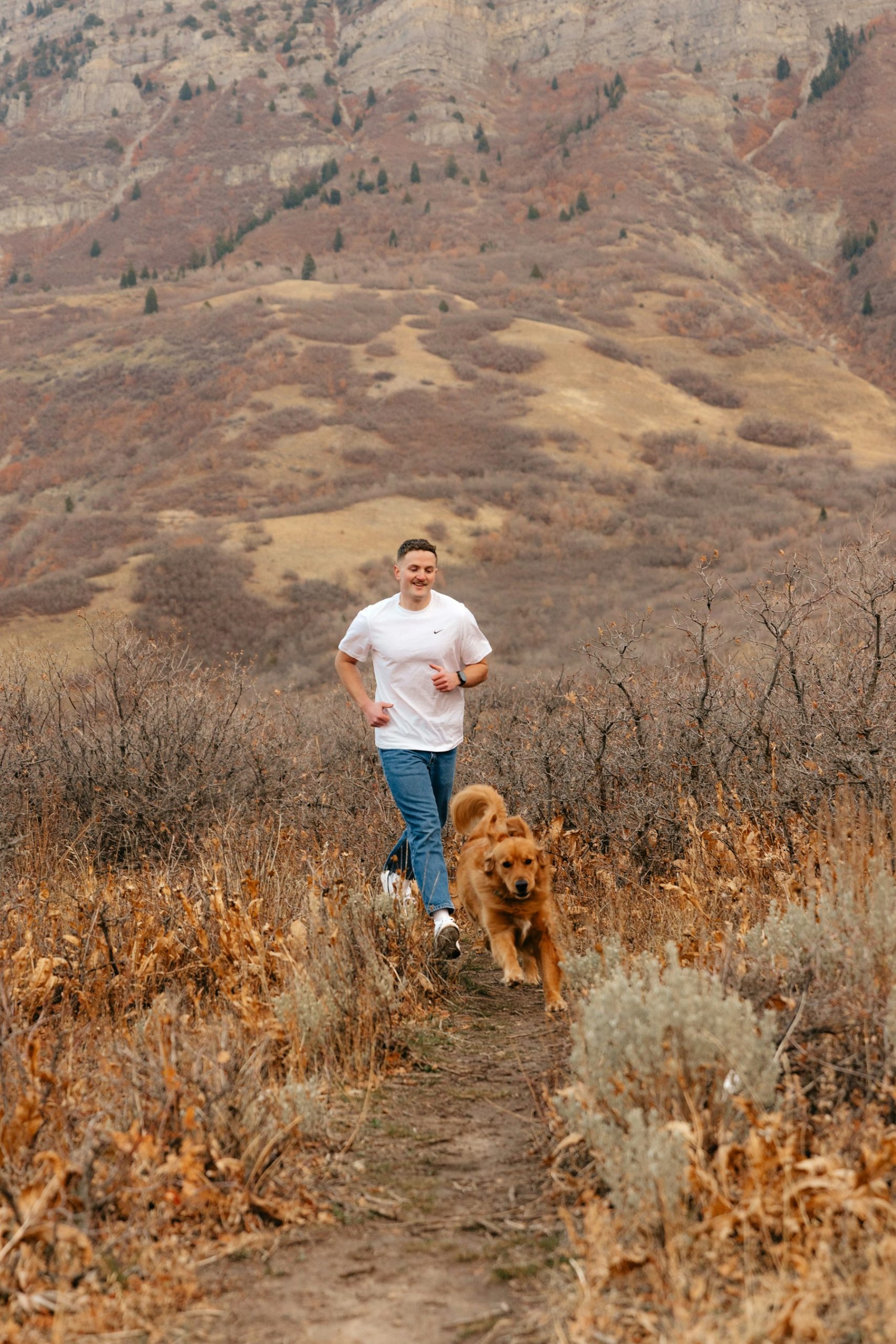
How much exercise does your dog actually need? If you have ever glanced at another dog running tirelessly at the park and wondered whether yours is doing enough, you are not alone. The question seems straightforward, but the answer is anything but.
Dog owners face a constant, low-grade pressure to measure up. One dog runs three miles a day and still demands more. Another is wiped out after twenty minutes. Both owners are left wondering if they are doing something wrong. The truth is that neither dog is wrong, and the pressure to conform to some invisible standard is mostly in your head. The real question is not whether your dog is exercising enough compared to other dogs. It is whether your dog is exercising in a way that fits their actual needs.
Why There Is No Universal Number
The exercise needs of dogs span a dramatic range, and the gap between a Greyhound and a Cavalier King Charles Spaniel is not a small one. Trying to apply a single daily minute target to all dogs is a bit like recommending the same caloric intake for a marathon runner and someone who reads on the couch. It ignores everything that makes each dog distinct.
Size is one factor. Large breed dogs generally require more movement because their bodies are built to do more work. But size is far from the whole picture. Breed purpose shapes a dog’s relationship with activity in ways that persist even generations removed from their original job. Herding breeds like Border Collies and Australian Shepherds were developed to run and think all day, and many of them will find ways to get into trouble if they are not given a genuine outlet for that energy. Terrier breeds were built to dig, chase, and persist. Sporting breeds like Labradors and Golden Retrievers tend to have endurance built into their frame and their temperament. The American Kennel Club notes that a dog’s breed heavily influences the level of physical activity they need, and understanding what your dog was originally designed to do is one of the most useful tools for figuring out what they actually need today.
Age matters too. Puppies are essentially furry energy disasters with no off switch, but they need frequent, short bursts of activity throughout the day, not one marathon session. Structured play and brief walks suit them better than long distance exercise, which can stress developing joints and growth plates. Most veterinarians recommend keeping structured high-impact exercise minimal until a puppy is fully grown, which varies by breed but generally falls somewhere between twelve and eighteen months. A widely used guideline from the UK Kennel Club suggests about five minutes of structured exercise per month of age, up to twice a day, until the puppy is fully grown. So a four-month-old puppy would get around twenty minutes per session. It is a conservative starting point, not a hard rule, but it reflects the real concern about protecting soft growth plates in developing bones.
Senior dogs need to stay active too, but the nature of that activity changes. Many older dogs develop joint stiffness or conditions like arthritis that call for lower-impact movement. There is no single formula for how much exercise a senior dog needs, and anyone who tells you otherwise is oversimplifying it. A twelve-year-old dog might handle sixty minutes of gentle walking without issue, while a six-year-old dog with hip dysplasia might struggle with thirty. Watch the dog in front of you, not the number on a clock. If you are noticing signs that your older dog is slowing down or moving differently, our article on subtle signs your senior dog needs more support covers what to look for and how to respond.
Health Conditions Change the Equation
Some dogs cannot run until they are tired, and knowing that is far more important than any exercise chart.
Chronic conditions like heart disease, respiratory issues, orthopedic problems, and metabolic disorders can all alter how much and what kind of activity a dog can safely handle. When a dog’s body is already working harder than it should at rest, adding vigorous exercise on top of that can push them into dangerous territory.
This is something we understand personally. Our dog Hazel, an Aussiedoodle, was diagnosed with renal dysplasia at eleven months old. The condition is rare and serious, and it came with immediate implications for how she could safely be active. Rather than the free-running lifestyle that might suit many doodles, Hazel needs a more carefully managed exercise approach. Situations like hers do not have a standard answer, because the answer has to come from what the dog’s body is actually telling you.
If your dog has a diagnosed health condition, your veterinarian is the right person to help you build an exercise plan that works within those constraints. Generic exercise advice does not apply, and what looks like laziness or stubbornness is often a dog managing their own limitations in the only way they know how.
Quality Over Quantity
One of the most underappreciated aspects of dog exercise is that the type of activity matters as much as the duration. A dog that gets two hours of leashed walking on concrete is getting something fundamentally different from a dog that gets forty-five minutes of active swimming or a long off-leash hike through varied terrain.
Mental stimulation is a real and significant part of the equation. A dog that is physically tired but mentally understimulated will often still act restless, destructive, or hyper. Puzzle feeders, scent work, structured training sessions, and exploratory walks where the dog sets the pace and follows interesting smells can tire a dog out more effectively than pure physical exertion. The American Kennel Club includes mental enrichment activities like obedience work and interactive games as legitimate forms of exercise, and for good reason.
This is part of why two dogs with identical physical exercise routines can look completely different in terms of their behavior and energy levels at home. One might be fully satisfied. The other might still be pacing at midnight. The second dog probably needs more mental engagement, not more miles on the leash.
Signs You Are Getting It Wrong
Most dogs will signal when their exercise routine is not working. The clues are easy to mistake for other problems, which is why they often go unrecognized.
Too little exercise often shows up as destructive behavior, excessive barking, fixation on family members, difficulty settling, or a dog that seems to have no off switch even after apparent physical activity. Weight gain is an obvious indicator, but it tends to be a later sign rather than an early one. The American Veterinary Medical Association identifies obesity as one of the most common preventable health issues in dogs, and insufficient exercise is a major contributor.
Too much exercise, particularly the wrong kind, tends to show up as stiffness after rest, limping that resolves with movement and then returns, reluctance to engage in activities they previously enjoyed, or a dog that seems exhausted rather than satisfied after activity. Dogs that are overworked may also become irritable or withdrawn. Pushing a dog through visible discomfort is a serious mistake that can result in long-term joint damage. If your dog is showing stiffness or changes in how they move, bone broth can be a supportive addition for joint comfort, though it is not a substitute for adjusting their exercise routine or seeing a vet.
Where to Start
If you are uncertain where your dog falls, start from the middle and adjust based on what you observe. Most adult dogs do well with somewhere between thirty minutes and two hours of active exercise per day, split into at least two sessions. The American Kennel Club puts the general range at thirty minutes to two hours depending on breed, and that lines up with what most veterinary sources recommend. From there, pay attention to what happens on the days they get less and on the days they get more. Most dogs will tell you what they need if you are willing to read the signals.
Build in variety when you can. A mix of physical activity, mental stimulation, and low-impact movement tends to produce a calmer and more balanced dog than a single high-intensity session followed by long stretches of nothing.
And when something does not feel right, whether that is your dog struggling to keep up or bouncing off the walls despite what seems like adequate exercise, that is information. Your dog is not broken. They are communicating. The sooner you learn to listen, the easier it becomes to give them what they actually need.
This article is for general educational purposes and is not veterinary medical advice. If your dog has a health condition that affects their exercise needs, consult your veterinarian for a personalized plan.
Related reading: Exercise is only part of the behavior picture, especially when the problem shows up at night or after the puppy stage. Read midnight zoomies, reactive dog training, and why dogs forget training around adolescence.

Tyler Tilton
I do not write surface-level dog advice. When our dog got sick, I learned the hard way that most of what is out there is recycled, watered down, or just wrong. I started The Daily Dog to be the resource I could not find, the one that goes deeper, asks harder questions, and gives you the full picture so you can make real decisions for your dog.
