
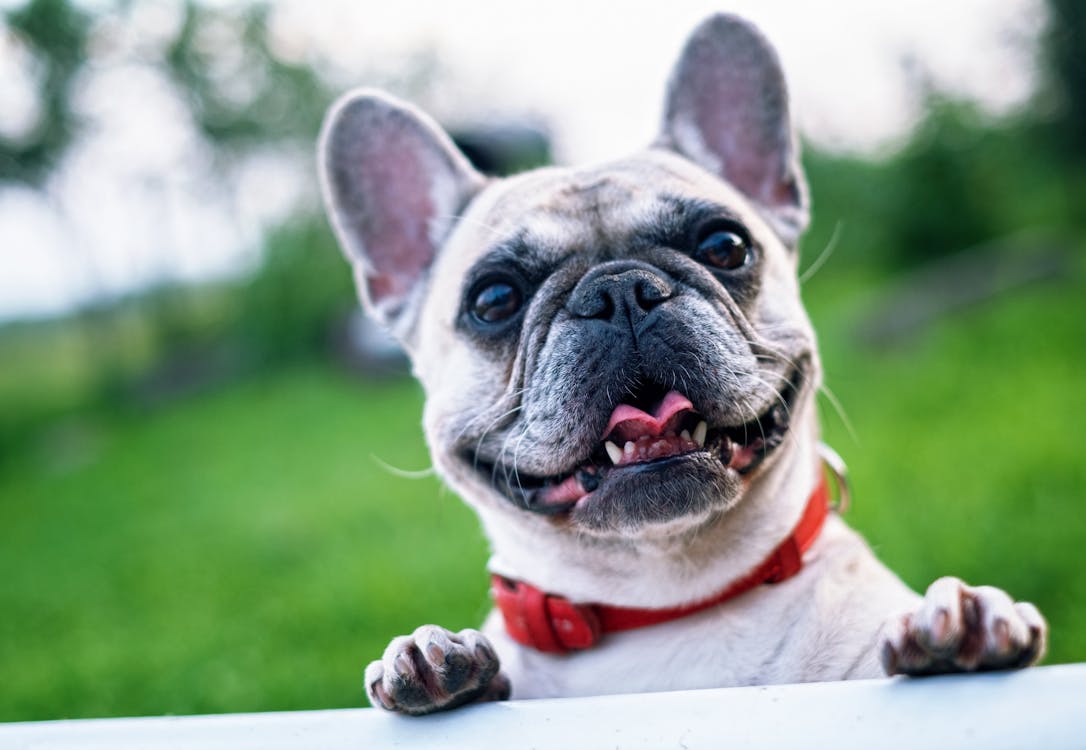
Walk into any dog-friendly cafe in America and count the flat-faced, bat-eared dogs in the corner. French bulldogs have held the top spot in the American Kennel Club’s rankings for four consecutive years, after overtaking the Labrador retriever in 2022 following the Lab’s 31-year run at No. 1. They are everywhere. They are adored. And the people who love them are often not prepared for what that love requires.
We created The Daily Dog because we believe you deserve the full picture before you bring a dog into your life. That means talking about the hard parts too.
The Flat-Face Problem: Brachycephaly and BOAS
The French bulldog’s signature look is also its most serious health liability. The breed’s shortened skull and compressed airway, a condition called brachycephaly, causes a cascade of breathing problems collectively known as brachycephalic obstructive airway syndrome, or BOAS. According to one study cited by TIME, French bulldogs are roughly 31 times more likely to suffer from obstructive airway syndrome than other dog breeds.
The signs start subtle. A dog that snorts on walks. One that overheats after ten minutes outside. One that collapses after brief excitement. These are not quirks of personality. They are structural failures caused by breeding choices that prioritized appearance over function.
BOAS is not cosmetic. It is a progressive condition. Dogs with moderate to severe airway obstruction face reduced exercise tolerance, chronic respiratory compromise, and cumulative strain on the cardiovascular system from years of labored breathing. Veterinary organizations including the AVMA have raised welfare concerns about breeding for extreme brachycephalic features. Some airlines, including American Airlines Cargo, do not accept brachycephalic breeds for cargo transport because of respiratory-risk concerns.
Surgery to open the airway can help, but it is not cheap. Soft palate resection, nares widening, and laryngeal saccule removal typically cost between $1,000 and $3,500, though complex cases at specialty hospitals can run higher. Not all dogs are candidates. Not all surgeries fully resolve the problem. And not all owners are warned about the lifetime management that follows.
Spinal Problems: IVDD and the Disk Disease That Costs Thousands
Intervertebral disk disease, or IVDD, is exceptionally common in French bulldogs. French bulldogs commonly carry the FGF4 retrogene associated with chondrodystrophy and increased IVDD risk, which contributes to premature disc degeneration and a much higher risk of disc herniation than in the general dog population. A 2025 study in the Journal of the American Veterinary Medical Association found that French bulldogs had an 8.4 percent lifetime prevalence of IVDD, second only to dachshunds, and were diagnosed at the youngest median age of any breed studied: 4.6 years.
When a disk ruptures, the timeline is brutal. A dog goes from normal mobility to dragging legs or unable to walk in hours. MRI imaging, the gold standard for diagnosis, typically runs $1,500 to $3,000. Spinal surgery, if the dog is a candidate, can cost $3,000 to $9,000 for the procedure itself, with total bills including hospitalization and aftercare sometimes reaching $10,000 to $15,000 at specialty neurology centers. After surgery comes weeks of strict crate rest, physical therapy, and careful management.
Some dogs recover well. Some do not. A retrospective study published in Acta Veterinaria Scandinavica found that more than half of French bulldogs who underwent IVDD surgery experienced a recurrence, with nearly one in four recurring within 12 months. French bulldogs under three years old had the highest recurrence rate at nearly 48 percent.
This is not a rare outcome. The incidence of disk herniation in chondrodystrophic breeds like French bulldogs peaks between three and seven years of age. If you are considering a Frenchie, IVDD is a meaningful risk you should prepare for.
Skin Folds and Eye Problems: The Hidden Daily Care Burden
French bulldogs have deep facial skin folds that trap moisture, bacteria, and yeast. Without daily cleaning and drying, these folds develop dermatitis, infections, and painful erosions. Skin-fold dermatitis is one of the most well-documented issues in the breed, and veterinary dermatologists see it constantly.
Owners who do not establish a daily cleaning routine within the first week of bringing a Frenchie home are almost always building toward a problem. The infection that starts as redness can progress to open sores, painful swelling, and the kind of chronic inflammation that requires ongoing veterinary management.
Eye conditions are equally common. French bulldogs’ protruding eyes have less orbital protection than other breeds, making corneal trauma from bumps and scratches a routine concern at the veterinary clinic. Corneal ulcers are a common problem in French bulldogs, and reduced corneal sensitivity may make early signs easier to miss.
Cherry eye, where the gland of the third eyelid slips out of position and becomes visible as a red lump in the corner of the eye, occurs frequently in the breed. It is common for these glands to prolapse within the first year of life, and it is also common for the second eye to follow within weeks to months. Surgical repositioning of the gland is the recommended treatment; removing it can reduce tear production and lead to dry eye. Dry eye (keratoconjunctivitis sicca) is another prevalent issue in Frenchies and can itself lead to corneal ulcers if left untreated.
The UC Davis Veterinary Genetics Laboratory lists French bulldogs as a breed for which the rcd4-PRA variant can be tested. The overall frequency and clinical expression of this mutation in French bulldogs is still being studied, but it is a known genetic risk in the breed.
These are not edge cases. They are expected features of breed ownership.
What Responsible Breeding Actually Requires
Not all French bulldogs are created equal. Health-tested breeding lines that select against BOAS, IVDD, and hereditary eye disease produce dogs with meaningfully better outcomes. The Orthopedic Foundation for Animals maintains an open database where prospective buyers can verify a breeding dog’s test results. The French Bull Dog Club of America’s health-testing guidance includes hip, patella, and eye evaluations, with cardiac testing also recommended.
Buyers who do not ask for this documentation are often paying the veterinary bills that a more rigorous breeding program would have prevented. A puppy from a health-tested litter may cost more upfront. It almost always costs less over a lifetime.
Reputable breeders also perform early socialization and veterinary health screenings before puppies go to new homes. These are not luxuries. They are the difference between a dog that costs thousands in emergency care before age three and one that runs and plays without structural compromise.
Our Perspective
We are not here to tell you not to get a French bulldog. We are here to tell you what you are signing up for. When we brought Hazel home, we did not know we were signing up for a rare kidney diagnosis, a complicated medical protocol, and a daily routine built around feeding schedules and supplement timing. We learned. We adapted. And we believe that knowledge is what makes the difference between owning a dog and being a true partner to one.
The French bulldogs that come from responsible breeding, with attentive owners who understand the breed’s needs, can and do live full lives. But the breed’s popularity has outpaced the honest conversation about what those dogs require. The Daily Dog exists to start that conversation.
If you are considering a French bulldog, talk to a veterinarian about breed-specific health screening before you commit. Ask for OFA results. Ask about the parents’ airway scores. Ask to see the dog move after light exercise. Walk away if the answers do not come easily. The right dog for you is out there. Make sure it comes with the information you need to care for it properly.
This article is for general educational purposes and is not veterinary medical advice. If you are considering a French bulldog or already own one, consult your veterinarian for breed-specific health guidance.

Tyler Tilton
I do not write surface-level dog advice. When our dog got sick, I learned the hard way that most of what is out there is recycled, watered down, or just wrong. I started The Daily Dog to be the resource I could not find, the one that goes deeper, asks harder questions, and gives you the full picture so you can make real decisions for your dog.
