
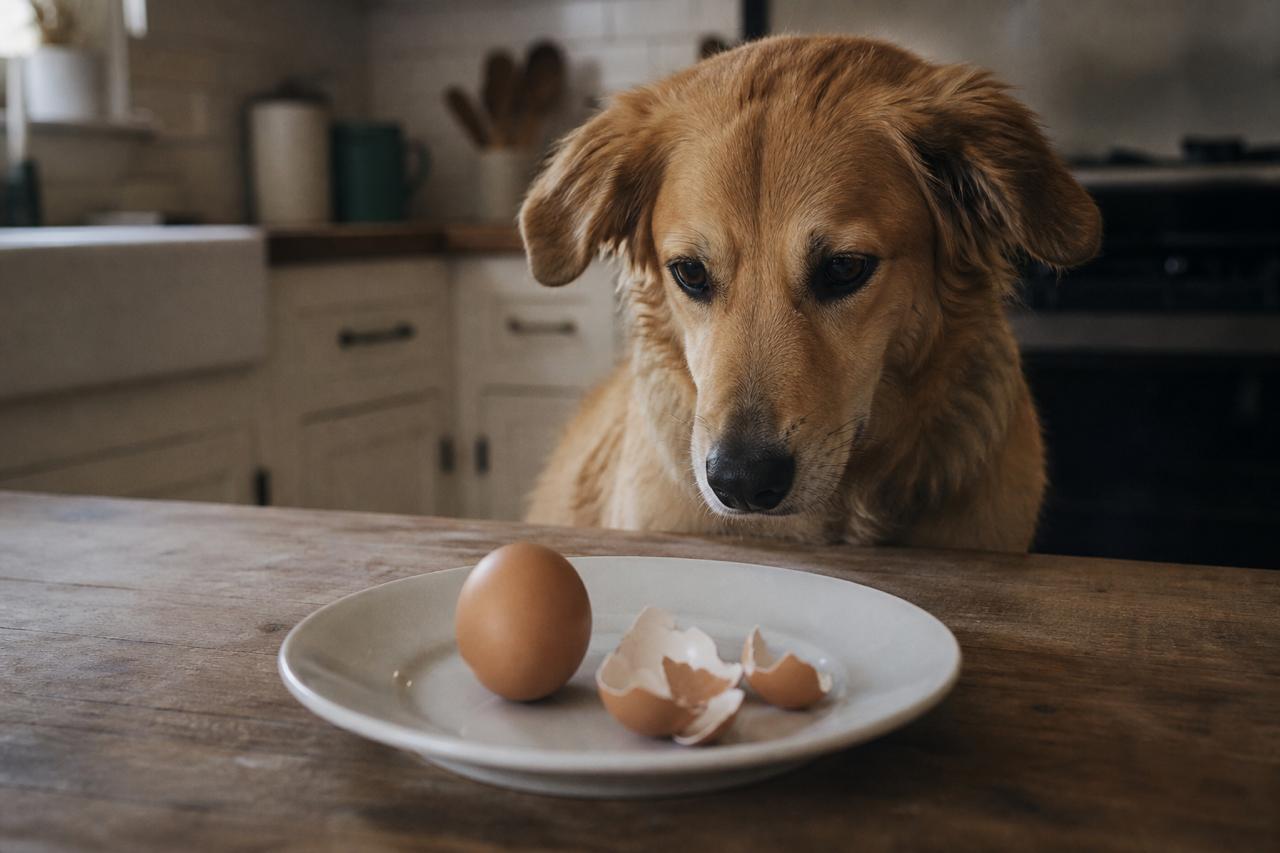
Crushed eggshell sounds harmless until calcium becomes guesswork.
It is easy to see why the idea catches on. The shell is already sitting there after breakfast, calcium is good for bones, and homemade and raw feeding groups talk about powdering shells into meals. Next to buying another supplement, drying and grinding something from your own kitchen can feel practical.
But calcium is not just a nice extra. It is part of a larger mineral system that includes phosphorus, vitamin D, your dog’s growth stage, kidney function, the rest of the diet, and their actual medical history. As the Merck Veterinary Manual explains, dogs have specific nutrient requirements that shift by life stage, and nutritional problems show up most often when dogs are fed unbalanced homemade diets rather than complete and balanced commercial food or a diet formulated by a board-certified veterinary nutritionist.
The Short Answer
Dogs can sometimes eat properly prepared, finely ground eggshell powder as a calcium source, but it is not a casual topper. The real question is whether your dog needs extra calcium at all. Dogs eating complete and balanced commercial food usually do not, and too much calcium can cause its own problems, especially for puppies, large-breed puppies, and dogs with medical conditions.
This is also where the food label matters. The FDA explains that a food whose label says “complete and balanced” is intended to be fed as a pet’s sole diet, which means the calcium is already accounted for. AAFCO adds that the nutritional adequacy statement on the label is the key to matching a food to your pet’s life stage and condition. If that statement is there, your dog is most likely already getting the calcium their stage of life calls for.
So, can dogs eat eggshells? Sometimes, yes. But the safest answer is not “sprinkle some in.” It is this: first confirm whether the whole diet actually needs calcium, then use a form and amount chosen with your veterinarian or a board-certified veterinary nutritionist.
This matters most in homemade diets. Meat-heavy homemade meals tend to run high in phosphorus and low in calcium, which can pull the diet out of balance unless a calcium source is planned correctly. Merck specifically warns that diets built from a limited number of foods, like meat-heavy or hamburger-and-rice meals, can trigger calcium deficiency and secondary nutritional hyperparathyroidism when they are not balanced.
Are Eggshells Safe for Dogs?
Eggshells can be safe for some dogs when they are cleaned, dried or cooked, and ground into a fine powder. But shell pieces are not the same thing as a planned calcium supplement. The American Kennel Club advises talking with your vet before feeding eggshells at all, because shells contain calcium that only some dogs need, and the sharp edges can hurt a dog’s throat or internal organs.
So the safety question really has two parts. The first is physical: large or jagged fragments can be sharp. The second is nutritional. Even ground smoothly, eggshell still adds calcium to the diet. That can help when a properly formulated homemade diet needs it, and it can backfire when your dog is already eating a complete and balanced food, or when their growth stage or medical history makes excess calcium risky.
Adding eggshell powder on top of a complete diet often does not improve anything. It may just push one mineral higher than intended. That is why the honest answer is boring but important. Eggshell is a calcium source, and Merck explains that calcium, phosphorus, and vitamin D have to stay in balance to keep bones and metabolism healthy.
Eggshell Powder Is Different From Shell Pieces
Fine powder and broken shell pieces differ on both safety and nutrition. Powder mixes evenly into food. Shell pieces can have sharp edges and create uneven intake from one meal to the next, which is the physical risk the AKC flags.
Powder is also easier to discuss with a vet or veterinary nutritionist because it behaves like a measured ingredient in a recipe. A nutritionist can account for a known calcium source in the context of your dog’s full diet. Random shell bits from the counter are much harder to control.
One thing worth not confusing while we are here: eggshell membrane, the thin lining inside the shell, is a separate joint-supplement ingredient, not the same as the calcium-rich shell itself. The AKC points to research in which eggshell membrane reduced joint pain and improved joint function in dogs with a range of joint problems. That is a different product from ground shell used for calcium, so do not assume crushing up your breakfast shells delivers the same joint benefit.
And none of this means you should dose eggshell powder on your own. Calcium needs depend on body size, calorie intake, life stage, current food, phosphorus intake, and health status. A pinch is not a nutrition plan. If a vet or board-certified veterinary nutritionist recommends eggshell powder as part of a homemade recipe, follow it exactly. VCA warns that changing homemade diet ingredients or supplements can disrupt the balance.
Why Homemade Diets Need Calcium Planning
Homemade dog food is where eggshell powder usually enters the conversation, and for good reason. Many home-prepared diets need a deliberate calcium source.
Meat brings phosphorus, but muscle meat on its own does not supply enough calcium to balance a long-term diet. That is why all-meat diets are a classic problem. Merck notes that animals fed all-meat diets commonly develop rickets, and that the usual culprit in diets causing defective bone formation is an imbalance in the calcium-to-phosphorus ratio.
This is also why “homemade” and “balanced” are not the same word. A meal can look fresh, clean, and thoughtful and still miss the mineral structure a dog needs over time. The VCA Animal Hospitals guidance on home-prepared diets makes the point bluntly: the most common imbalances they see in homemade food involve calcium and phosphorus, and recipes are best formulated by a veterinary nutritionist rather than copied from a generic source you found online. Changing ingredients or supplements on your own can disrupt the balance a recipe was built around.
If you are feeding a few bites of plain cooked egg as an occasional treat, that is a different conversation. The AKC says cooked eggs can be a fine occasional treat for many dogs, though too many add calories or can unbalance an already complete diet. Eggshell calcium is more consequential because it changes the mineral profile of the bowl.
For the bigger picture on home cooking, we get into it in Is Homemade Dog Food Actually Safe?. Eggshells are one piece of that larger question, not a shortcut around it.
What Can Go Wrong When Calcium and Phosphorus Are Out of Balance?
Calcium and phosphorus problems can run in more than one direction. Too little calcium, too much phosphorus, low vitamin D, kidney disease, and over-supplementation each cause trouble in their own way, because calcium, phosphorus, vitamin D, and parathyroid hormone are all linked.
In growing dogs, rickets is the classic deficiency disease. Merck describes it as a rare condition of young, growing animals, usually caused by too little phosphorus or vitamin D, less often by calcium deficiency, and occasionally by too much calcium producing rickets-like signs. It can show up as soft or deformed bones, bone pain, swelling, a stiff gait or limp, trouble rising, bowed limbs, and fractures. In adults, the equivalent is osteomalacia, where mature bone loses mineral and you can see bone pain, fractures, and deformities. When vets work up these bone disorders, one of the first things they check is whether the diet supplies enough calcium, phosphorus, and vitamin D.
Kidney disease adds another layer. Merck explains that progressive kidney disease can involve excess phosphate, low calcium, increased parathyroid hormone, phosphorus restriction, active vitamin D, and phosphate binders, all under a vet’s direction.
That is the part kitchen advice usually skips. A dog with kidney disease, a bladder stone history, an endocrine disorder, a growth condition, or a prescription diet should not get extra calcium because a social post said eggshells are natural. Merck is clear that medical context changes mineral decisions.
Puppies and Large-Breed Puppies Need Extra Caution
Puppies are not small adults. Their food has to support active growth, and the calcium range matters because their bones are still forming. AAFCO treats growth and reproduction as a separate life stage from adult maintenance for exactly this reason.
Large-breed and giant-breed puppies deserve even more caution. Merck is specific here: feeding too much calcium or phosphorus can increase a dog’s susceptibility to diseases it is genetically prone to, and giant-breed dogs fed excess calcium are more likely to develop osteochondrosis and hypertrophic osteodystrophy.
So eggshell powder is especially risky as a casual add-on for puppies, even when the intention is good. A large-breed puppy already eating a complete large-breed puppy food should not have calcium added without veterinary direction. If you are still choosing that first food, our guide to choosing the right puppy food explains why life-stage labeling and breed size matter.
If a puppy is on a homemade diet, the answer is not to guess with eggshells. It is to get the recipe built by a board-certified veterinary nutritionist. Growth is a narrow window, and mineral mistakes during it can be far more serious than the same mistakes in an adult.
Raw Eggshells Versus Cooked Eggshells
Raw eggs and raw shells raise two separate concerns: bacteria and nutrient interference. The AKC notes that most vets recommend cooking eggs before feeding them, because raw eggs can expose both dogs and people to Salmonella, and raw egg whites contain avidin, which can block biotin absorption if a dog eats enough of it over time. Merck makes the same point about avidin, and adds that cooking destroys several of these antinutritional factors.
Eggshells themselves are mineral, but they come out of the same food-handling environment where bacteria live. So if a vet or nutritionist has signed off on eggshell powder, the conservative prep is to use clean, heated shells, dry them fully, and grind them into a fine powder.
Raw feeding brings its own pathogen and balance questions on top of all this. The FDA warns that raw pet food is more likely than other tested pet food types to be contaminated with disease-causing bacteria, including Salmonella and Listeria. If the eggshell idea is part of a raw plan, start with our raw feeding safety guide before you change anything.
When Eggshell Calcium Might Make Sense
Eggshell powder makes the most sense when a vet or board-certified veterinary nutritionist uses it as a defined calcium source inside a complete homemade recipe. In that case the shell is not in the bowl because it is trendy. It is there because the recipe needs calcium and a professional has accounted for the dog’s total intake.
A plan like that covers far more than the shell: calories, protein, fat, essential fatty acids, vitamins, trace minerals, calcium, phosphorus, life stage, and any medical conditions. Merck’s own framing is that nutritional disease is rare in dogs eating good commercial food or a properly formulated homemade diet, and most common in unbalanced homemade ones. The shell is a tool within a plan, not the plan itself.
When Eggshell Calcium Is a Bad Idea
Eggshell calcium is a bad idea for a dog eating complete and balanced commercial food, unless a vet has found a specific reason to add it. That food is already built around a life-stage nutrient profile, and piling calcium on top mostly risks overshooting it.
It is a bad idea for puppies and large-breed puppies unless a nutritionist has built it into the diet, because excess calcium is not harmless in a growing dog. Merck ties excess calcium in giant-breed dogs directly to developmental bone disease.
It is a bad idea for any dog with kidney disease, a urinary stone history, a parathyroid disorder, unexplained high blood calcium, or a prescription diet, unless the vet managing that condition recommends it. Merck ties calcium, phosphorus, vitamin D, kidney function, and parathyroid hormone together.
And it is a bad idea when the only reason is “calcium is good.” Nutrient profiles include maximums, not just minimums, because more is not automatically better. A nutrient earns its place when it solves a real need.
What to Ask Before Using Eggshell Powder
Before you add eggshell powder to anything, bring these questions to your vet or a board-certified veterinary nutritionist. Is the current food already complete and balanced for the right life stage? Does this dog actually need extra calcium? What does the calcium-to-phosphorus balance of the whole diet look like once treats, toppers, bones, and supplements are counted? Is your dog a puppy, large-breed puppy, pregnant or nursing, senior, or managing a medical condition? Is eggshell the best calcium source, or would a measured supplement be more precise? VCA recommends professional formulation for homemade diets because these changes affect the whole recipe.
These are diet-level questions, not ingredient-level ones, which is the whole point. If you cannot answer them yet, the shell can wait.
Safer Alternatives if a Dog Actually Needs Calcium Support
For most dogs, the safest “calcium supplement” is no supplement at all, because a complete and balanced commercial food already includes the calcium their life stage calls for.
For dogs that genuinely need a homemade diet, the safer routes are a recipe formulated by a board-certified veterinary nutritionist, a complete commercial fresh food matched to the dog, or a measured commercial calcium supplement chosen by whoever is formulating the diet. Eggshell powder can be one option inside that plan, but it is not automatically the best one.
For dogs with medical conditions, a prescription or therapeutic diet is often safer than anything an owner builds by hand. Merck notes that kidney-related mineral problems may call for restricted phosphorus, active vitamin D, and phosphate binders, all managed by the vet.
And if the goal is just to add variety, skip the shell and use small, safe additions that do not move the nutrient profile much. A bit of plain cooked egg can be a fine occasional treat for many dogs, as long as you remember it is calorie-dense and easy to overdo AKC.
Bottom Line
Dogs can eat eggshells in the narrow sense that properly prepared, finely ground eggshell powder can work as a calcium source for some dogs. That is not the same as saying eggshells belong in every bowl.
If your dog eats complete and balanced commercial food, extra calcium is usually unnecessary. If your dog eats a homemade diet, calcium planning is essential, and that plan should come from a vet or board-certified veterinary nutritionist. If your dog is a puppy, a large-breed puppy, or has a medical condition, do not add eggshell calcium without professional guidance.
The kitchen myth is that eggshells are automatically safe because they are natural. The calmer, more useful truth is that eggshell powder can be a tool, but only when the whole diet actually needs that tool.
This article is for general educational purposes and is not veterinary medical or nutritional advice. Talk with your veterinarian before adding calcium supplements, changing a homemade diet, or feeding eggshell powder to puppies or dogs with medical conditions.

Tyler Tilton
I do not write surface-level dog advice. When our dog got sick, I learned the hard way that most of what is out there is recycled, watered down, or just wrong. I started The Daily Dog to be the resource I could not find, the one that goes deeper, asks harder questions, and gives you the full picture so you can make real decisions for your dog.
